
School Projects

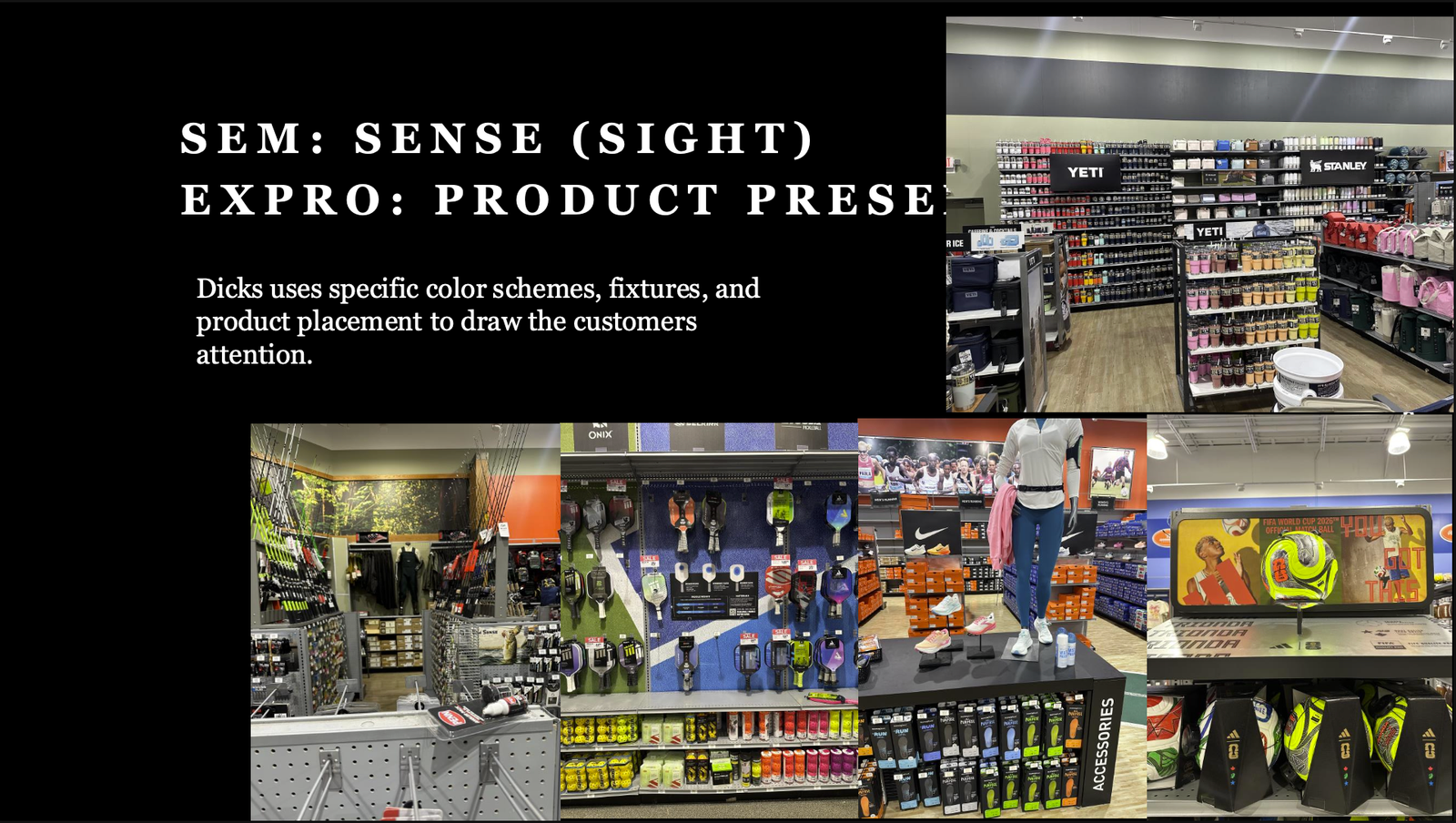

Trying a golf club, asking an employee for advice, and watching a product video are different ways of getting to know a brand. Each interaction gives a customer information, but it can also influence how comfortable, interested, or involved they feel. For an experiential marketing project, I worked with Brendan, Chase, and Jake to analyze DICK’S Sporting Goods across its physical stores and digital channels. We examined how the brand presented products, encouraged participation, and connected shopping with sports and athletic identity.
The project gave me a framework for looking at the details of a customer’s experience and explaining the purpose they might serve. We organized our analysis around five Strategic Experiential Modules: Sense, Feel, Think, Act, and Relate. These categories helped us examine sensory experiences, emotions, mental engagement, physical participation, and social connection. We also identified the experience providers delivering those experiences, including employees, product displays, store environments, and digital media.
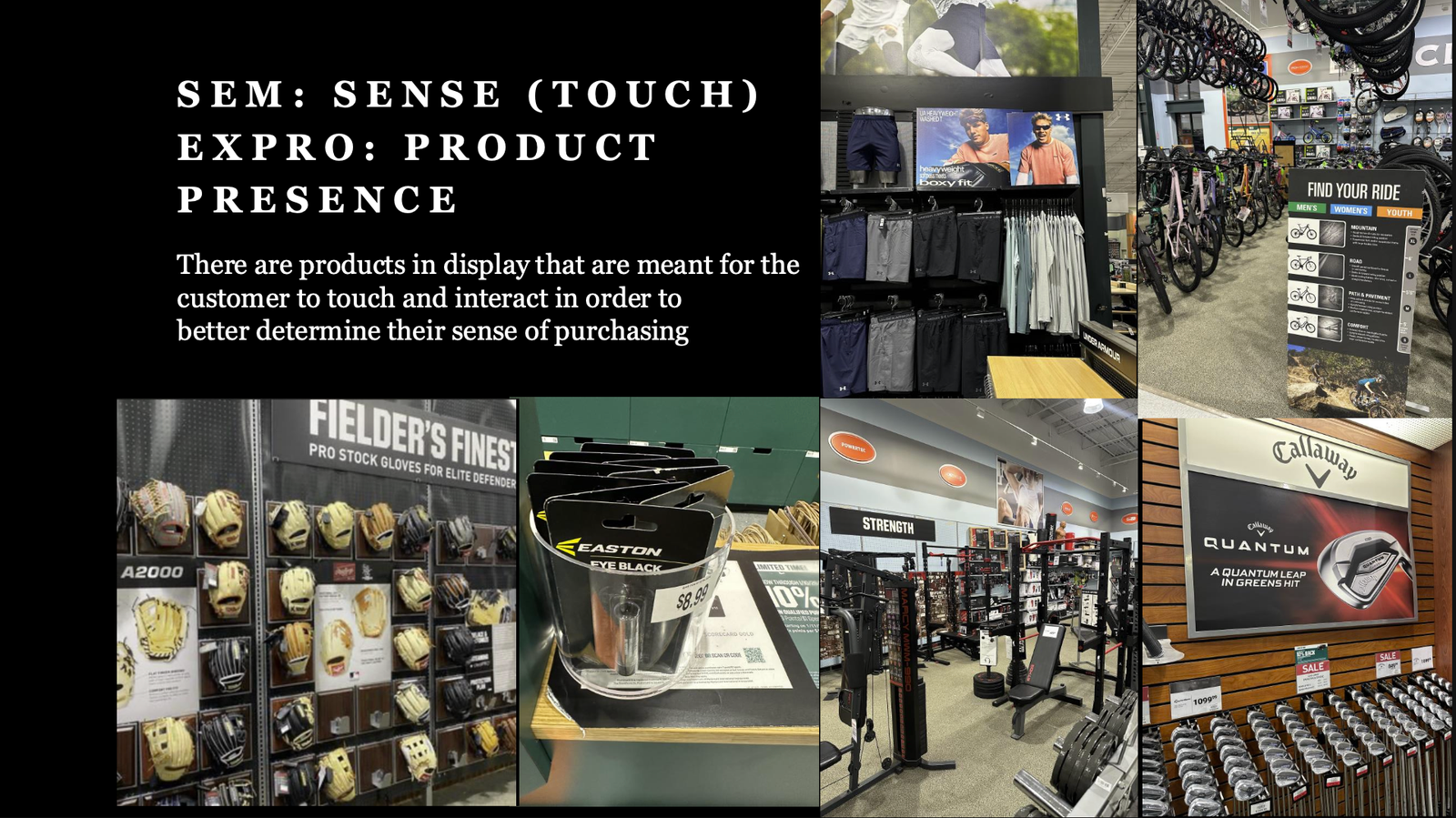
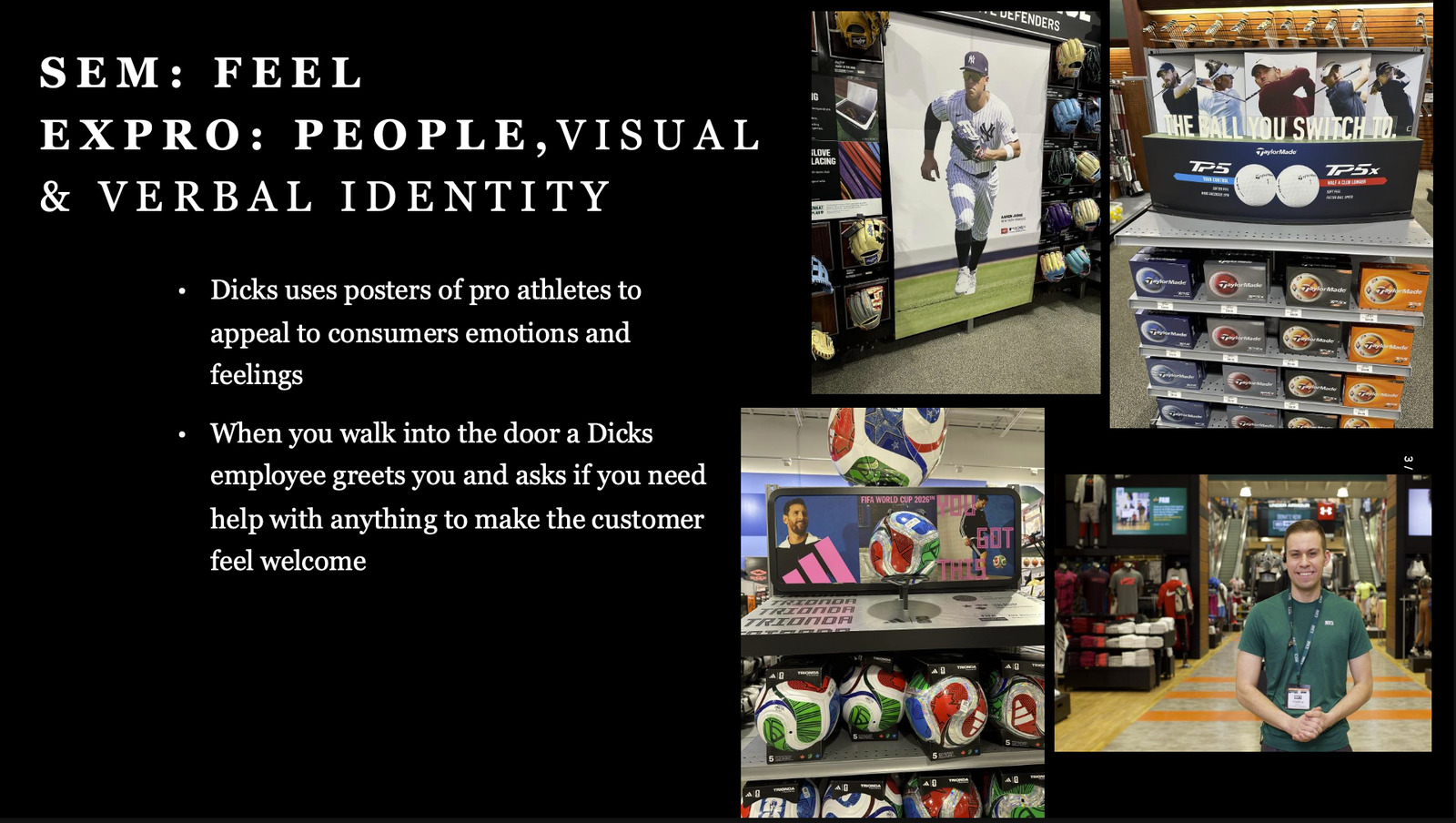
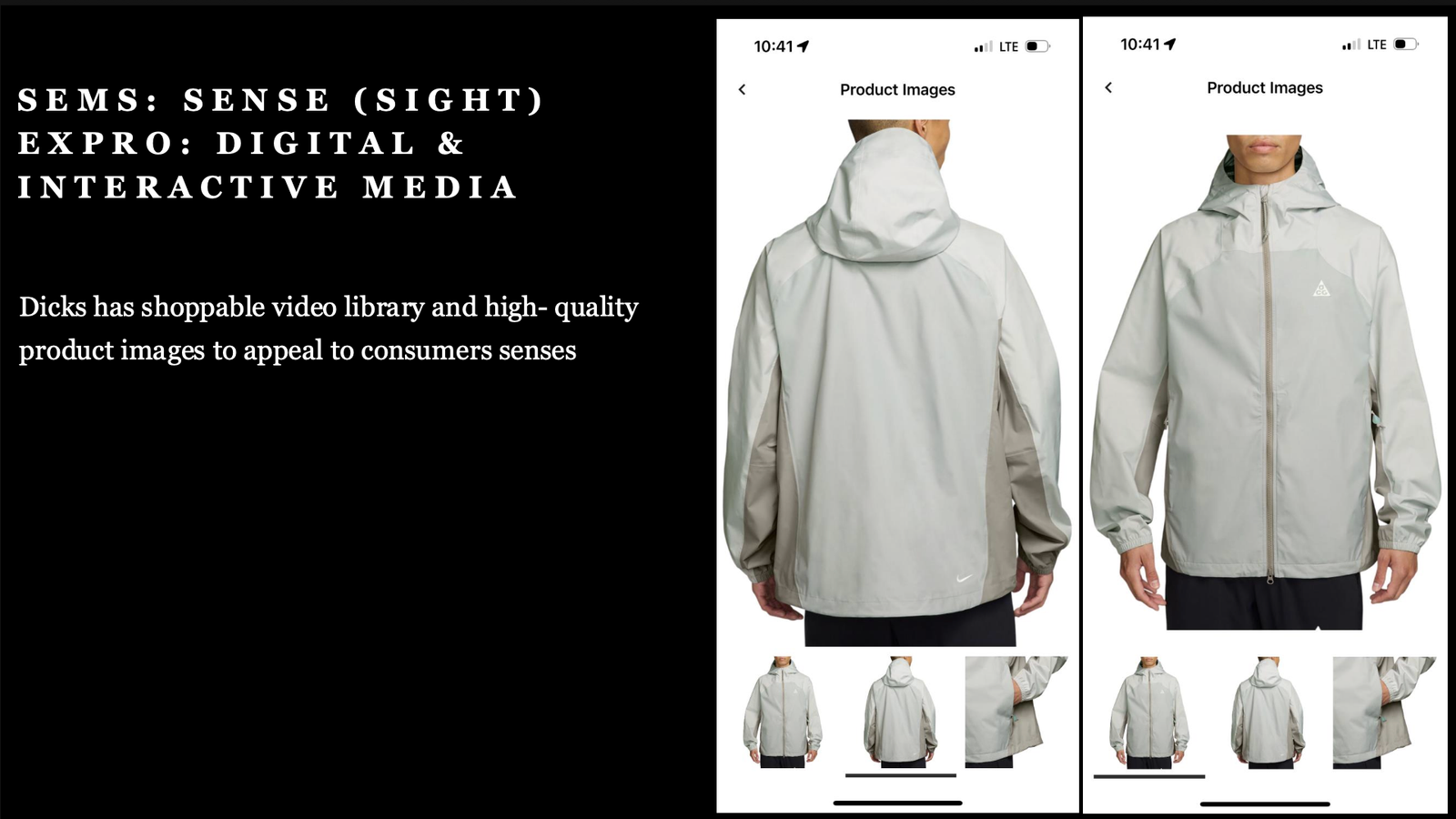
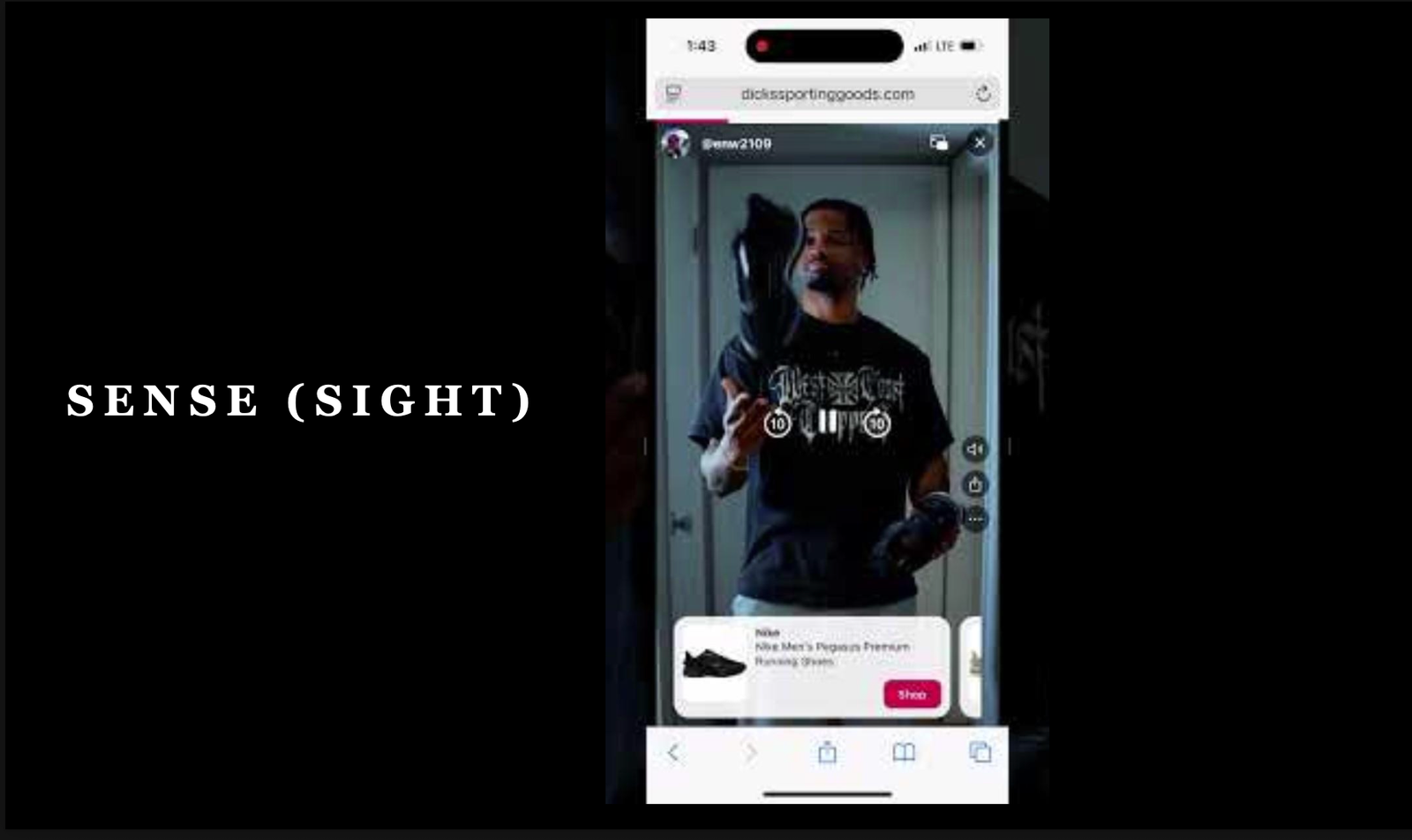
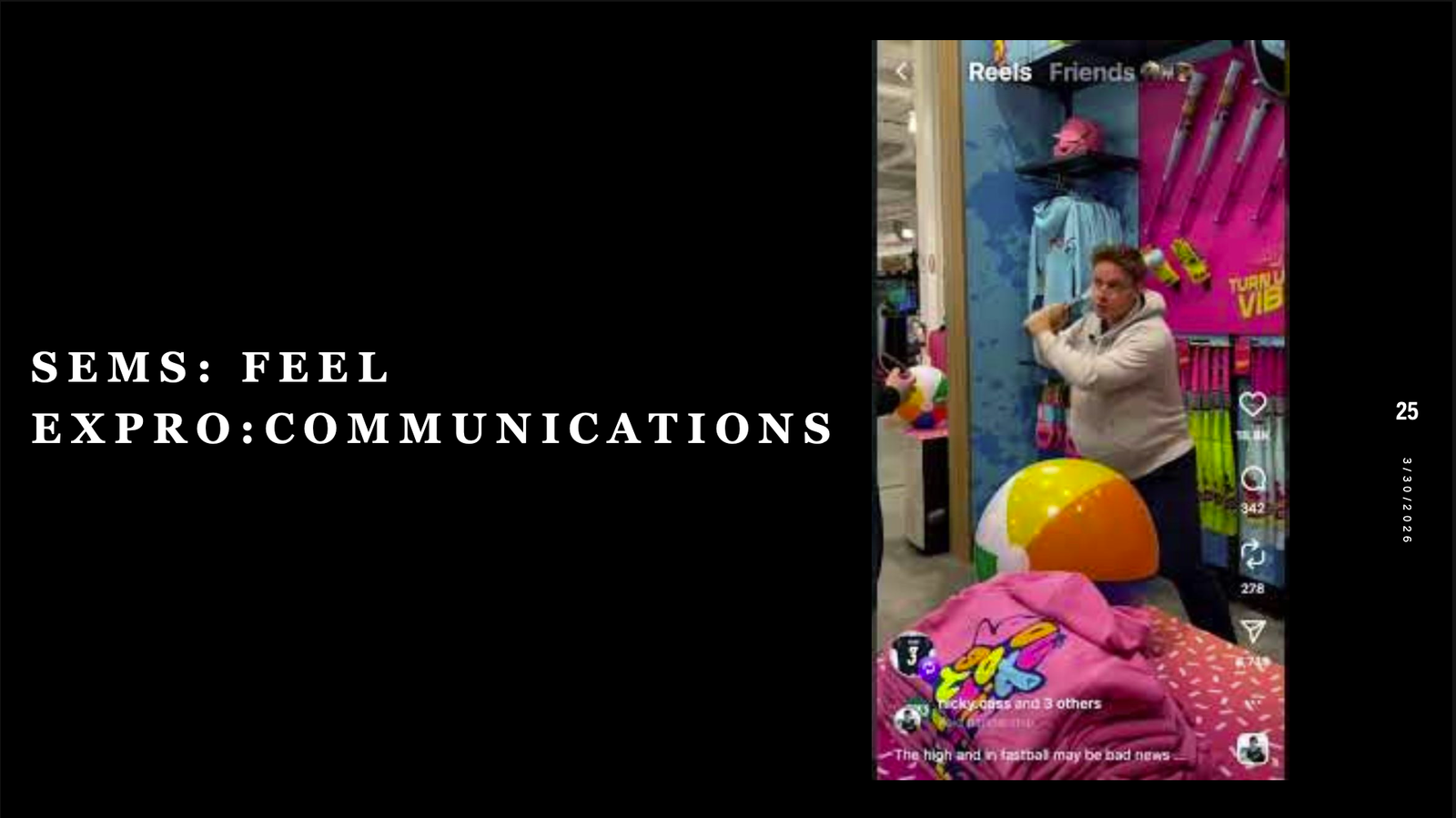
That distinction helped make the analysis more specific. “Feel” describes the emotional experience we were examining. An employee greeting, athlete image, or personalized message is a possible way of creating it. Connecting the two required us to explain how a particular interaction might affect a customer. Our Sense analysis focused on the store’s visual presentation, sound, and opportunities to touch products. The examples in our presentation included color schemes, fixtures, product placement, and music. We also discussed sports commentary played between songs. Together, these details gave us a way to consider how the surroundings reinforce the sporting context.
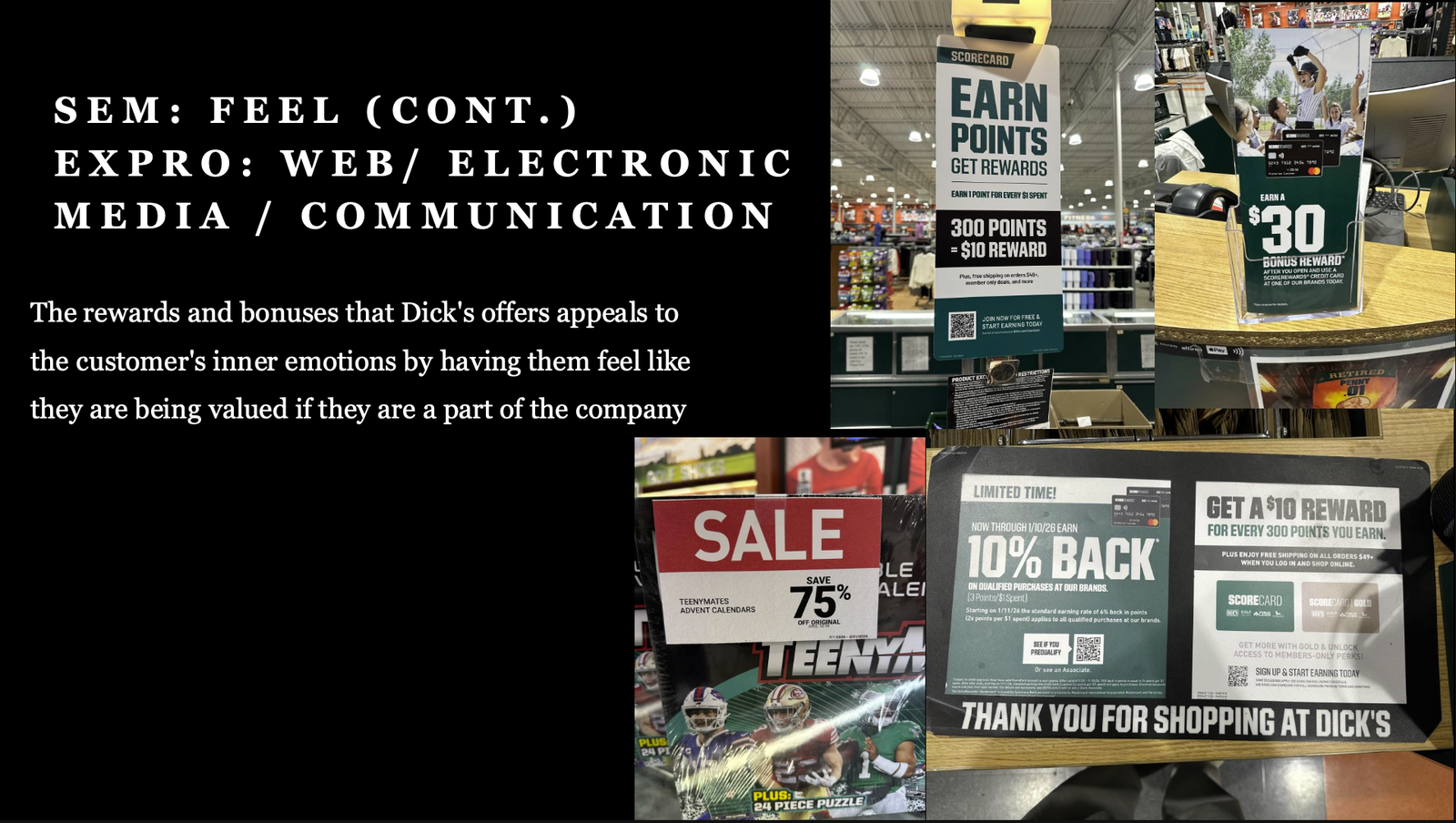
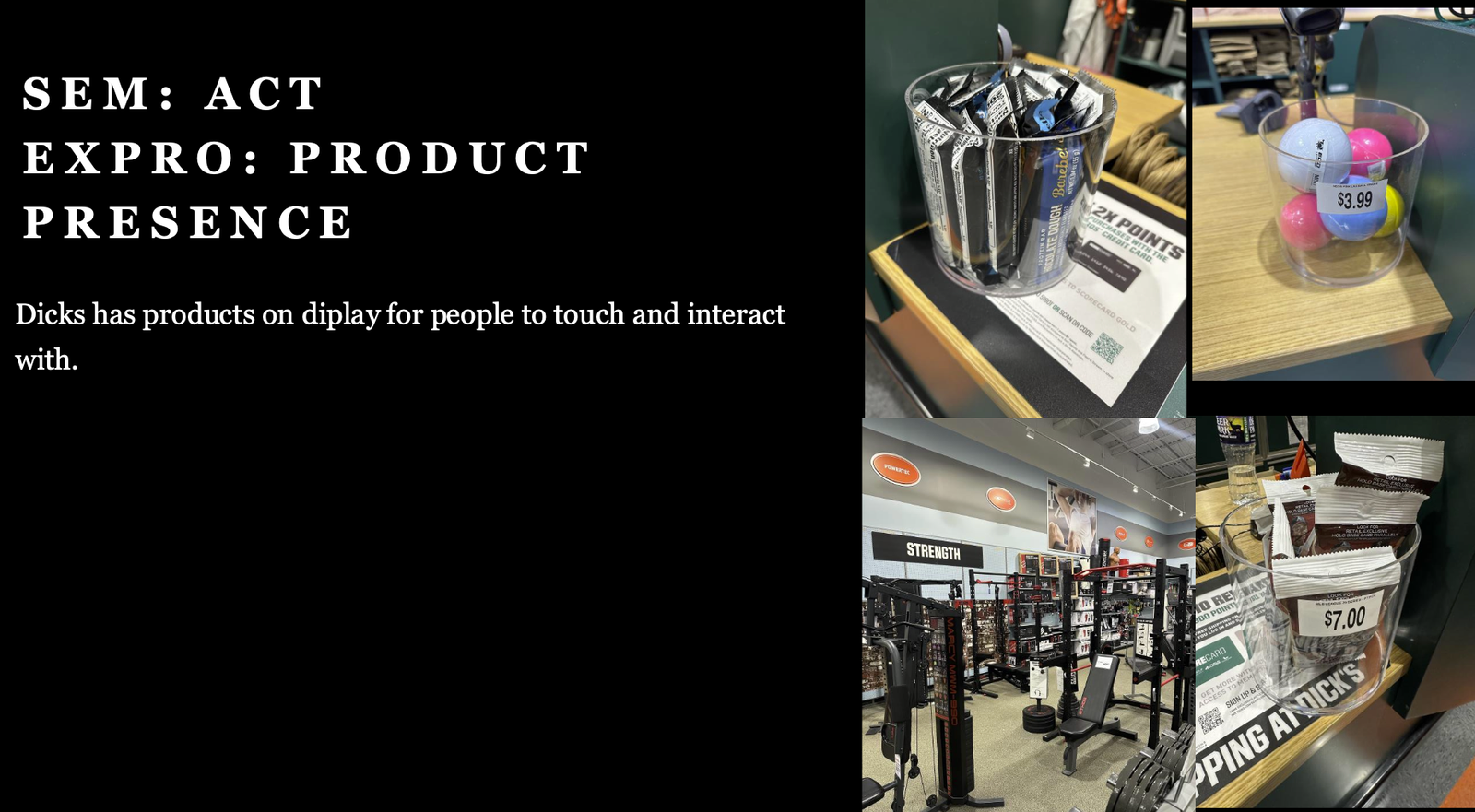
Touch brought the analysis closer to the purchase decision. Holding equipment or examining a product gives someone information that a photograph cannot provide in the same way. This made me think about the connection between presentation and evaluation: the way a product is displayed can influence how easily someone explores it. For Feel, we examined employee greetings, athlete imagery, and rewards messaging. We interpreted these as possible ways to make customers feel welcomed, inspired, or recognized. These were our interpretations of the touchpoints. Understanding how customers actually felt would require asking them or observing their responses more systematically.
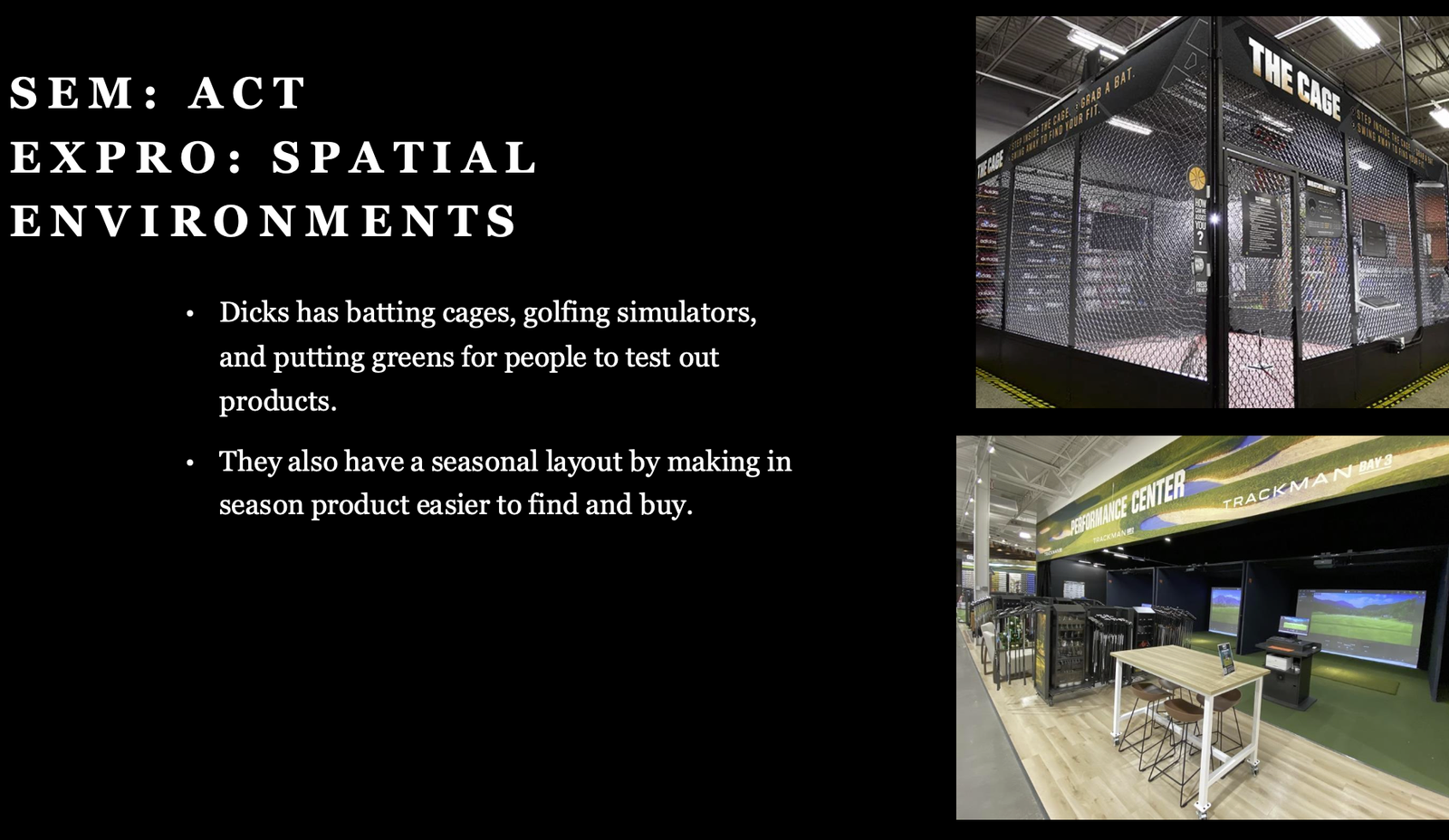
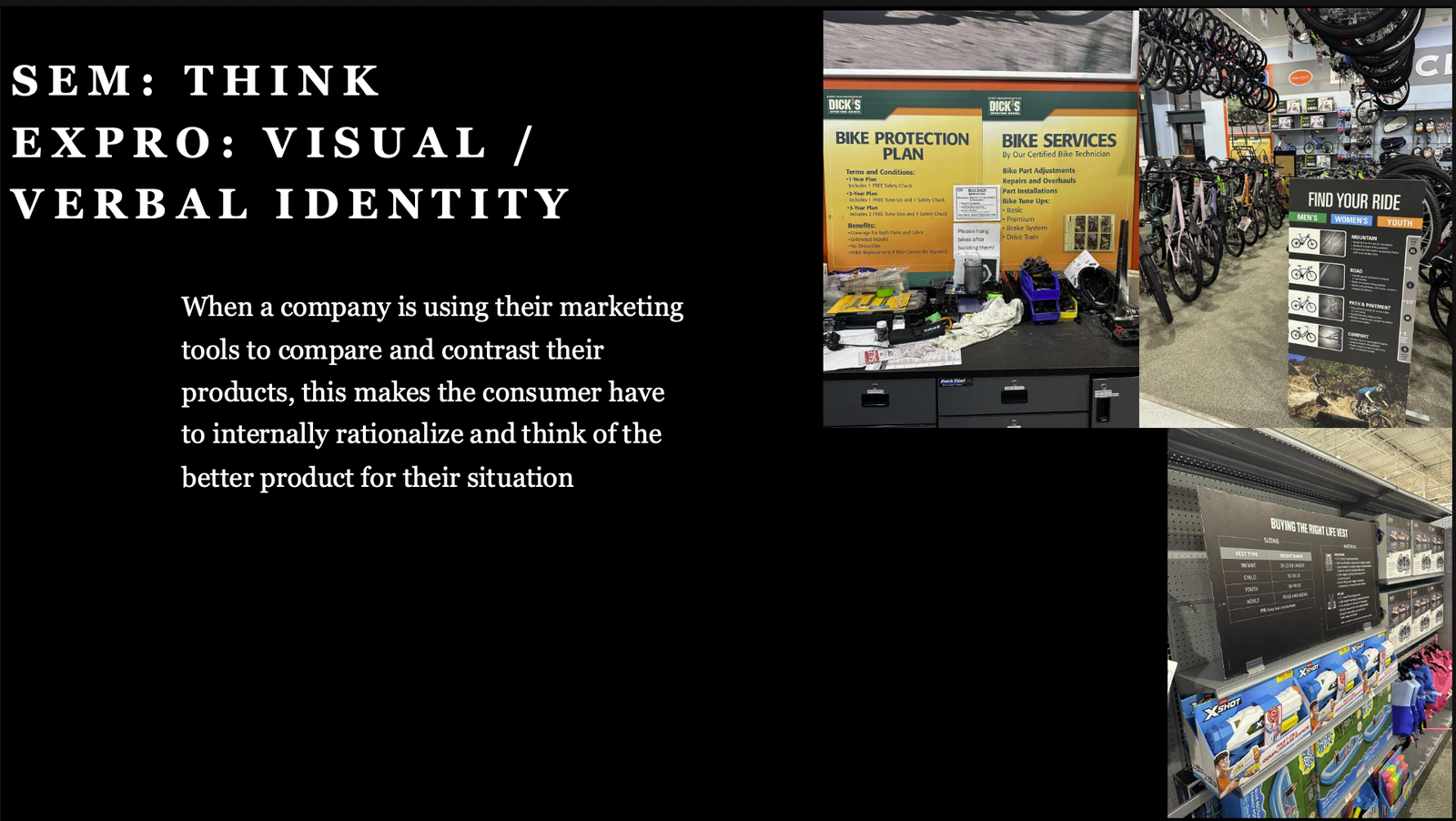
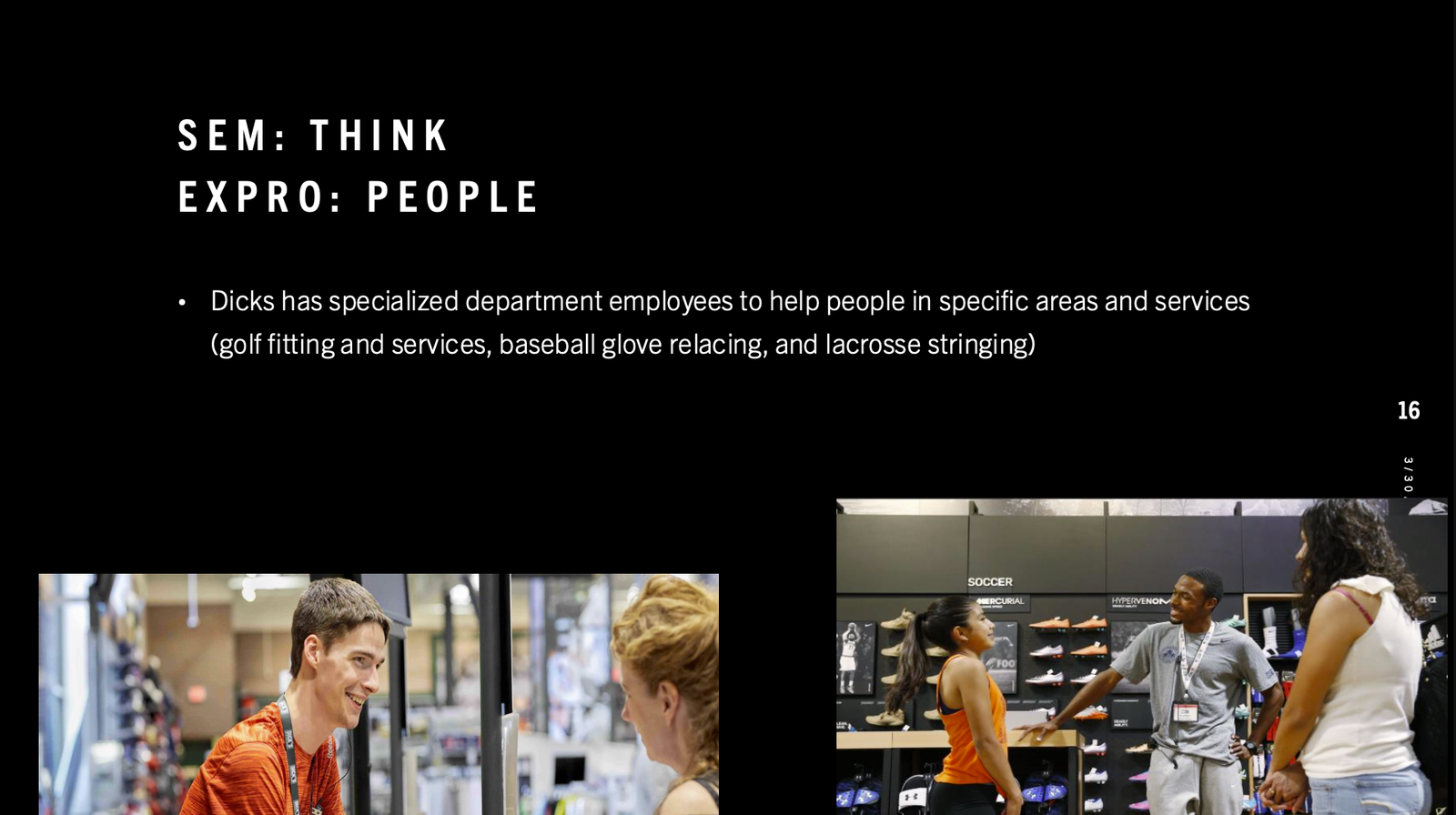
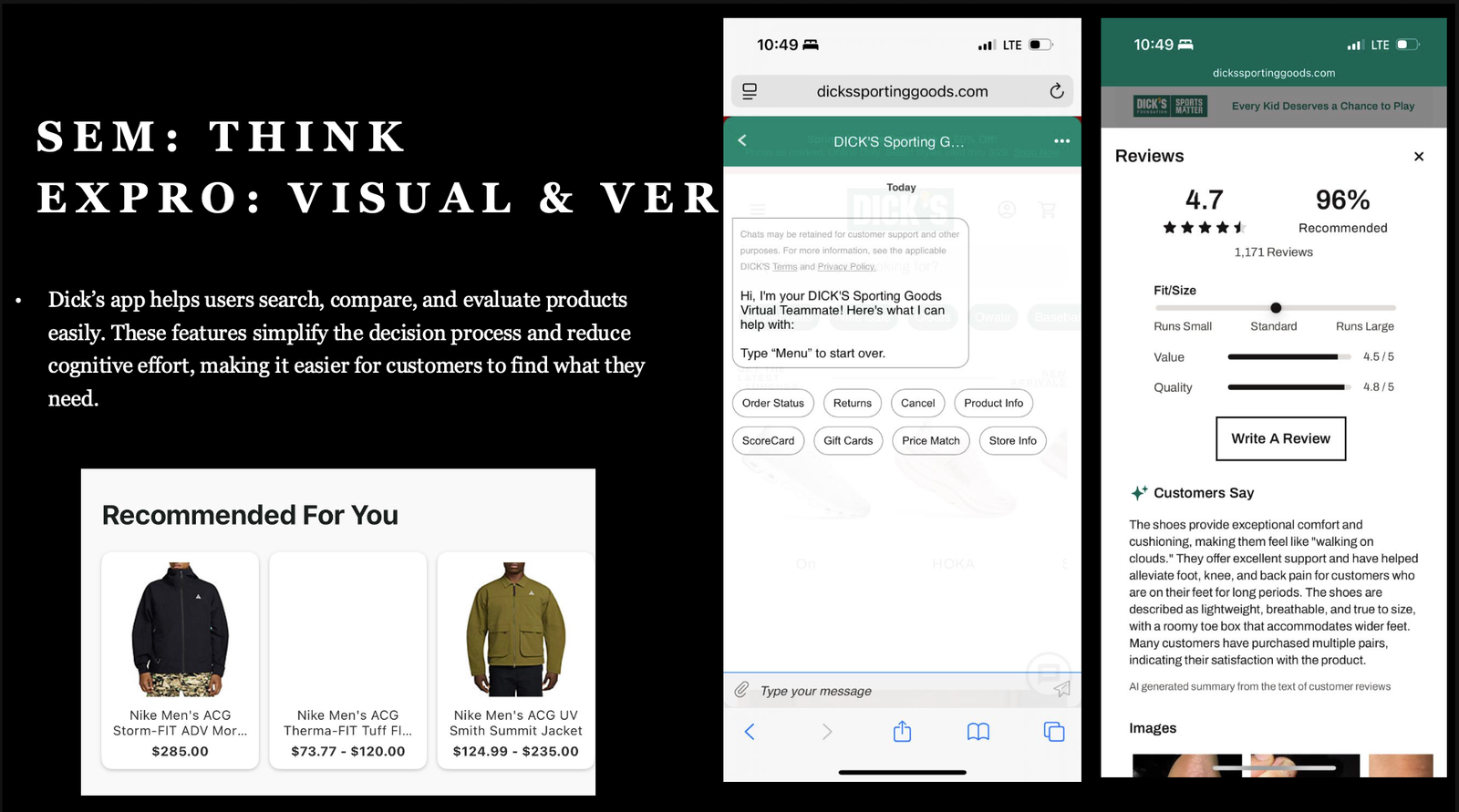
The Act category was especially visible in our examples of golf simulators, putting greens, and batting cages at locations offering those facilities. These spaces invite customers to participate in an activity while exploring equipment. They also helped us distinguish between displaying a product and creating an opportunity to experience its use. Our Think analysis considered product comparisons, sizing information, and specialized employee assistance.
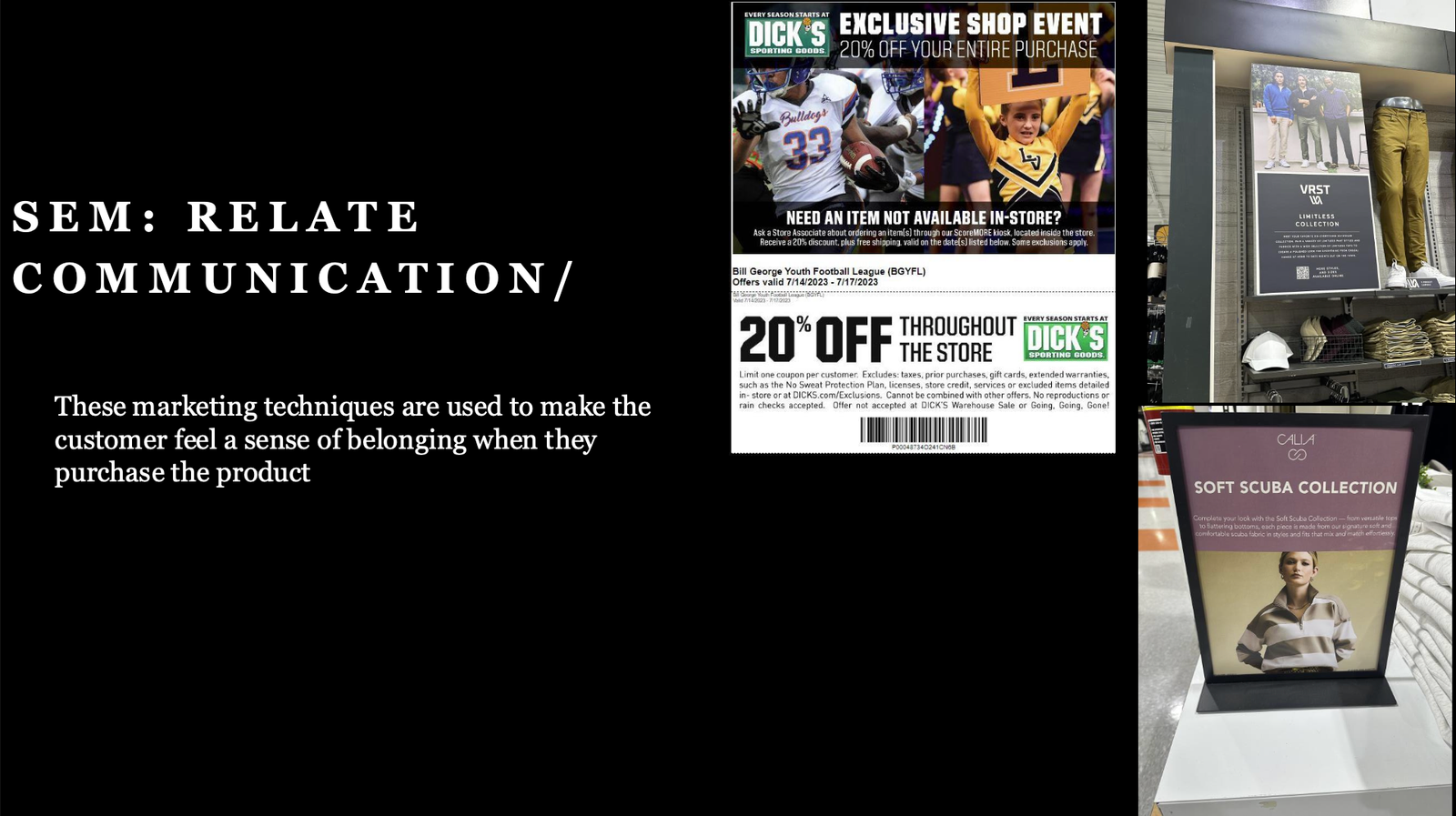
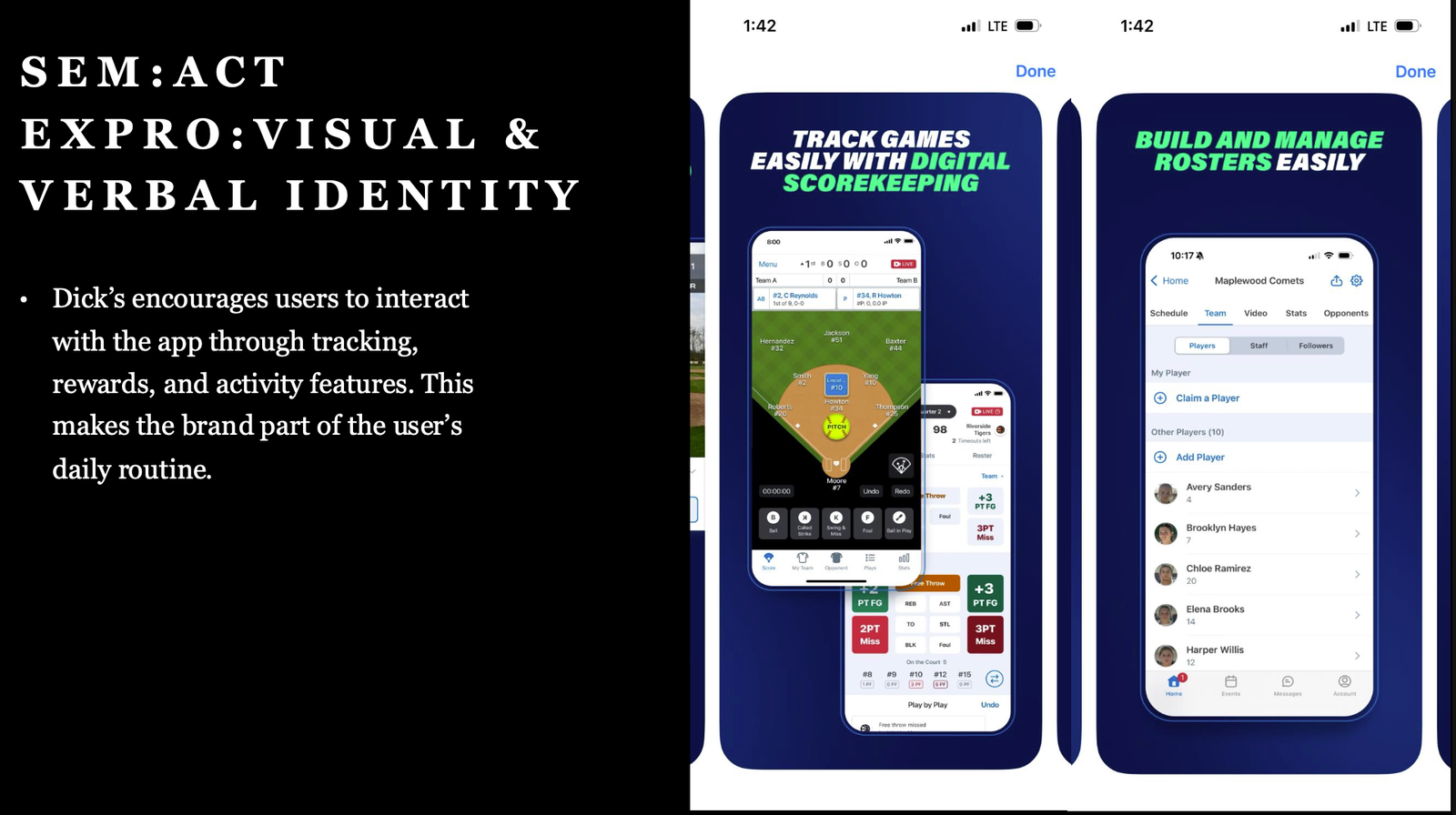
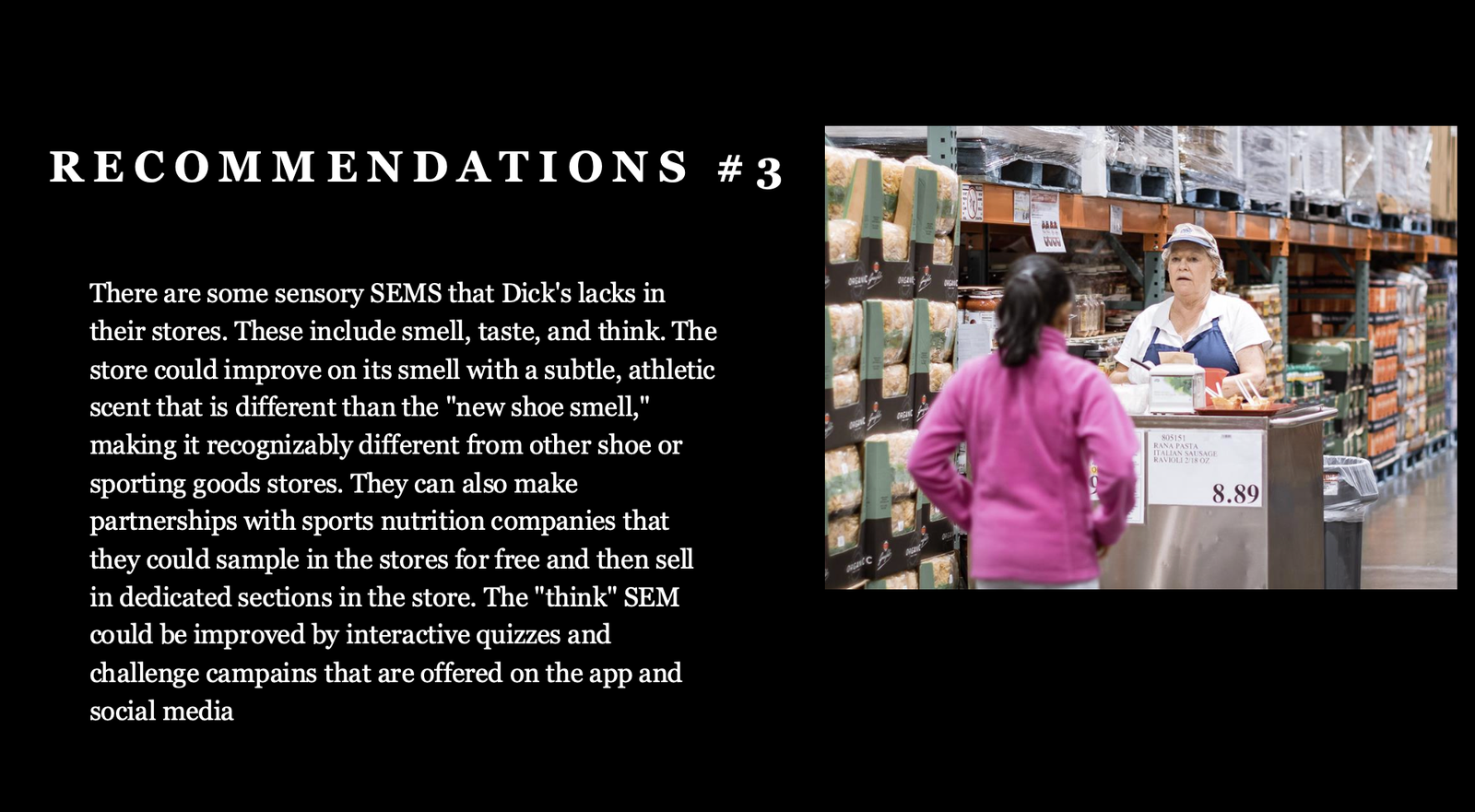
These examples focused on helping customers evaluate their options. We also proposed interactive quizzes and challenges as ways to encourage more active thinking and problem-solving. That gave me a useful distinction between providing information and inviting someone to work through an idea. For Relate, we explored how the brand connected with sports communities and athletic identity. Our presentation examined athlete-focused language, team-related content, and digital tools associated with sports participation. The question was whether these interactions could help someone see a connection between the brand and an activity or community that matters to them.
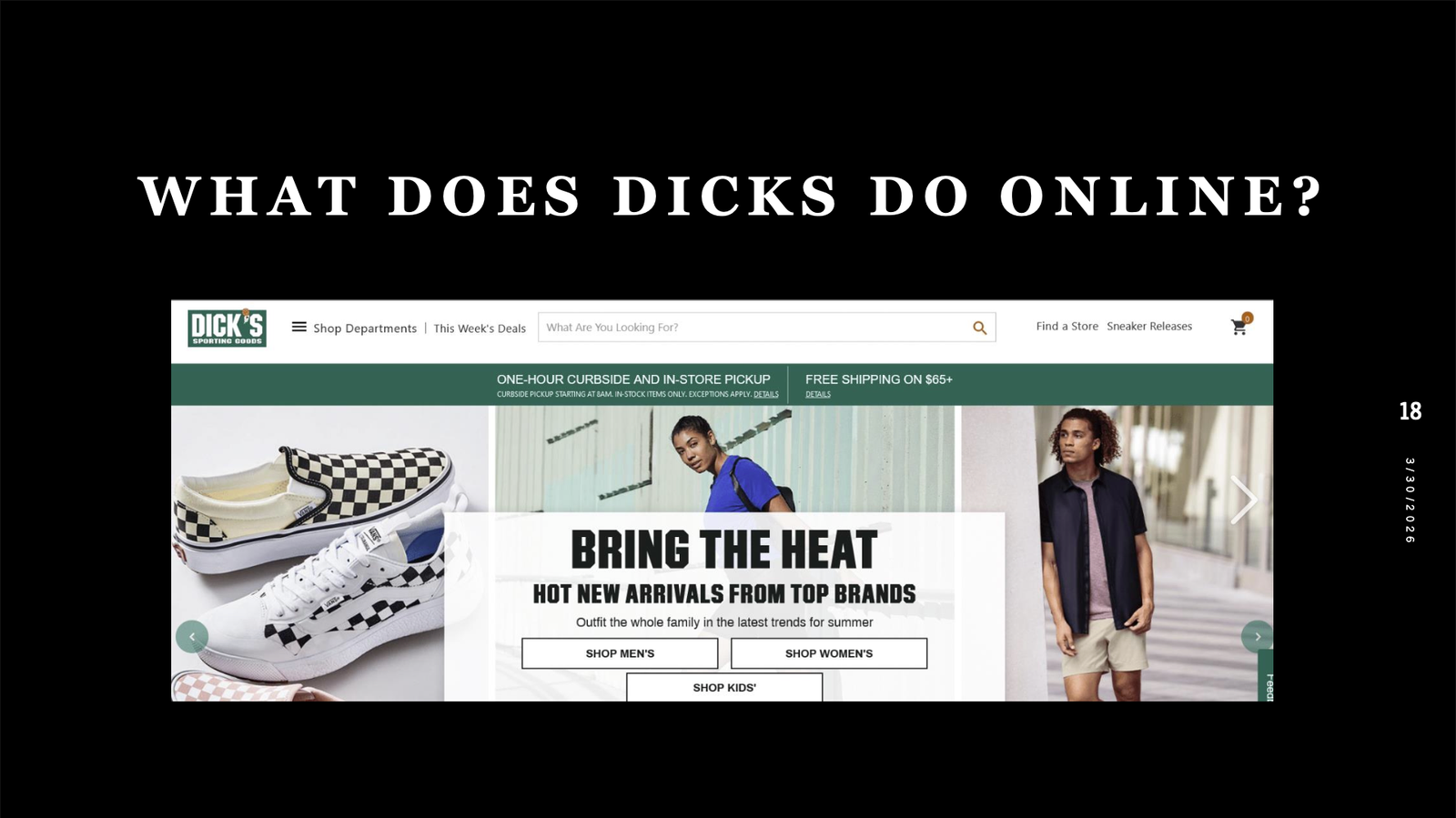
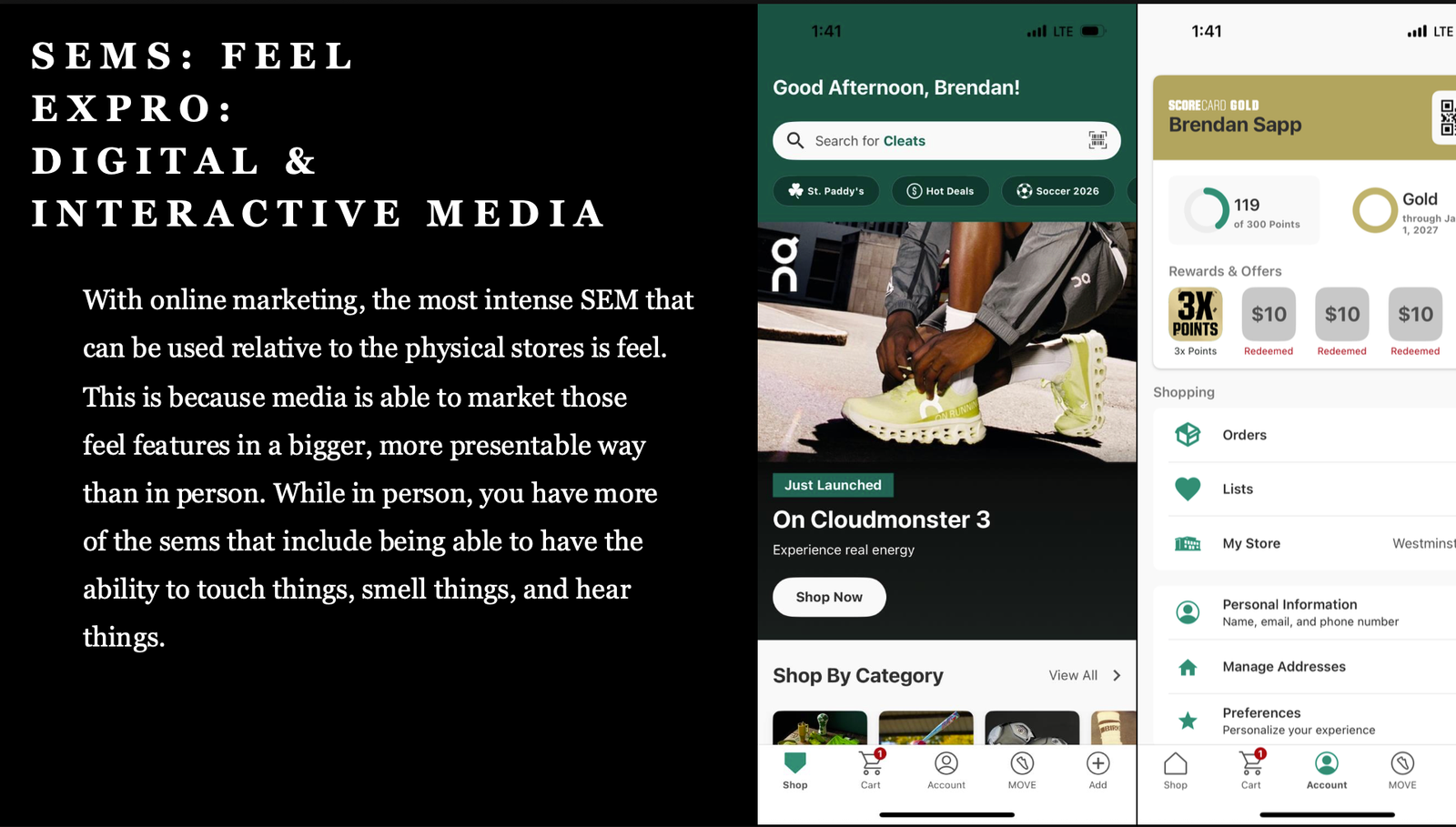
We then compared the physical and digital experiences. In-store examples centered on handling equipment, trying activities, and receiving help from employees. Online examples included product images, videos, reviews, buying guidance, and personalized offers. This comparison helped me consider what each channel could contribute to the same customer’s decision. One lesson was to avoid treating the channels as interchangeable. A video can demonstrate a product and use sound, while a store allows direct physical interaction. The more useful question is how those experiences can support each other.
Our presentation explored that connection through a hypothetical sequence: someone sees baseball content on social media, explores products in the app, visits the store for guidance, and later receives a rewards offer. Mapping those steps helped me think about consistency across interactions. Each step should help the customer continue toward their goal. We also considered intensity, breadth, depth, and linkage. These gave us ways to examine how strongly an experience engages someone, how many experiential categories it involves, how fully it develops one category, and how it connects with other interactions. A batting cage, for example, offered a focused way to discuss physical participation. An activity-and-rewards feature gave us a way to explore several possible experiences together.
Our recommendations included improving consistency across locations, offering more direct online assistance, and using athlete and community stories. These were proposals from our analysis, rather than changes we implemented or tested. A next step would be to identify a specific customer difficulty and evaluate whether one of those ideas helped resolve it. My main takeaway is that customer experience becomes easier to analyze when I connect a visible detail to a clear purpose. A display may help someone notice a product. A conversation may help them choose. A chance to try equipment may answer a question they could not resolve online.
As I continue developing my marketing skills, I want to use that approach to make more precise recommendations: identify the interaction, explain what it is intended to do, and look for evidence of how customers respond.