Personal Projects

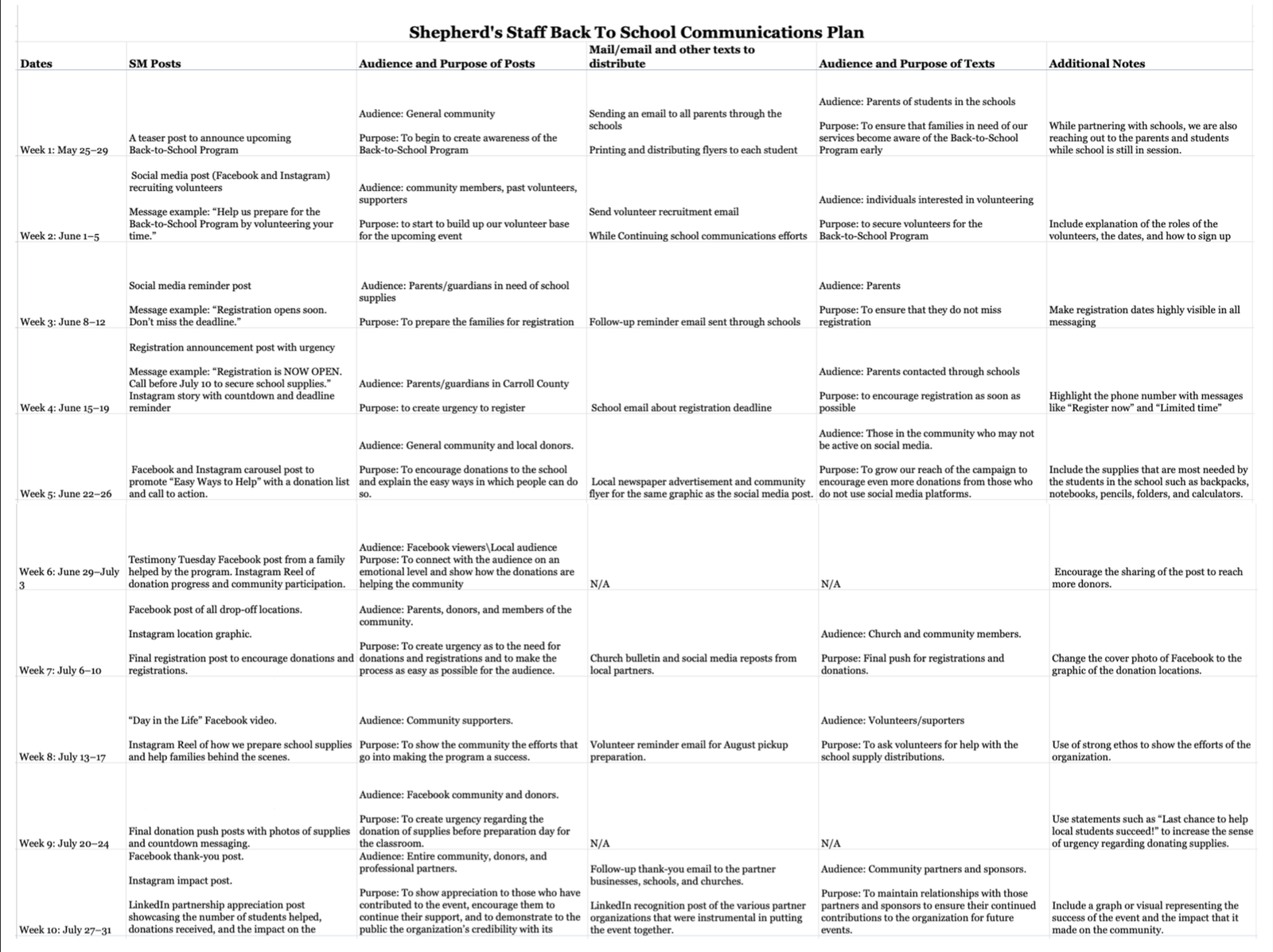
A parent looking for school supplies needs different information from someone deciding whether to donate or volunteer. Even when they’re supporting the same program, the message that helps each person take action will be different. That was the challenge behind my Shepherd’s Staff Back-to-School Communications Plan. For this project, I worked on a ten-week schedule covering social media, school emails, and community outreach. The plan connected each message to an audience and a purpose, from introducing the program to thanking the people who supported it.
The schedule began with awareness. During the first week, I planned a social media teaser alongside emails to parents through schools and printed flyers for students. The intention was to introduce the program early and reach families while school was still in session. This gave the timing a practical purpose: use an existing connection with families before the summer break. The next stage focused on volunteer recruitment. I included Facebook and Instagram posts for community members, past volunteers, and supporters, along with a recruitment email. The plan also called for explaining volunteer roles, dates, and how to sign up. A request for help becomes easier to respond to when people understand what they would actually be doing.
For families, the messages shifted toward registration. The plan moved from an early reminder to a registration announcement, followed by deadline reminders leading up to July 10. I included notes to make the dates and phone number easy to find. This helped me think about the difference between telling someone a program exists and giving them enough information to participate. Donation messages required another approach. I planned an “Easy Ways to Help” carousel with a supply list and a clear call to action. The examples included backpacks, notebooks, pencils, folders, and calculators. Naming specific items made the request more concrete and gave potential donors a clearer sense of how they could contribute.
I also considered people who might never see the social media posts. The plan included a local newspaper advertisement, community flyers, church bulletins, and outreach through schools and local partners. Each channel had a reason to be there. School communications could reach parents, while community publications and bulletins could introduce the program to additional supporters. Later in the schedule, I proposed content showing the people and preparation behind the program. Ideas included a family testimonial, donation-progress updates, and a “Day in the Life” video about preparing school supplies. These were planned content ideas, with the purpose of helping supporters understand how their contributions would connect to the program’s work.
One part of the project that stands out to me is the “Audience and Purpose” columns. They made me explain each communication decision. A post could introduce the program, recruit volunteers, encourage registration, or ask for supplies. Giving it a specific purpose helped me decide what information belonged in the message and what the audience should do next. The plan also included appreciation posts and follow-up emails to partners. I wanted communication to continue beyond the request for support. Thanking volunteers, donors, schools, and other partners was part of recognizing their contribution and maintaining those relationships.
Looking back, I would refine the timing of the impact reporting. The schedule places impact posts in late July but also mentions preparation for an August pickup. I would use July updates to report confirmed preparation progress and save final statements about students served for after distribution. That would keep the reporting aligned with what had actually happened. This project helped me practice connecting audience needs with message timing and channel choices. The finished plan documents a proposed approach, rather than campaign results. Its value for my learning was having to explain why each communication belonged in the schedule.
As I continue building my communication and marketing skills, I want to keep asking the questions this project required: Who needs this information? When will they need it? What should they be able to do after receiving it?